Common Generac Problems in Indiana Winters
Most Generac generators that fail to start in a hard Indiana winter are not broken. They have a weak battery, the wrong oil for the cold, a snow-blocked enclosure, or a unit that was never serviced. Cold-weather no-starts are common across every standby brand, and nearly all of them are preventable. That matters here, because a Central Indiana ice storm is exactly when the grid drops and your generator has to cold-start under load. This is what tends to go wrong when the temperature falls, why it happens, and how the right install and annual service keep your unit starting every time a storm rolls through Hamilton County.
Last updated: September 2026
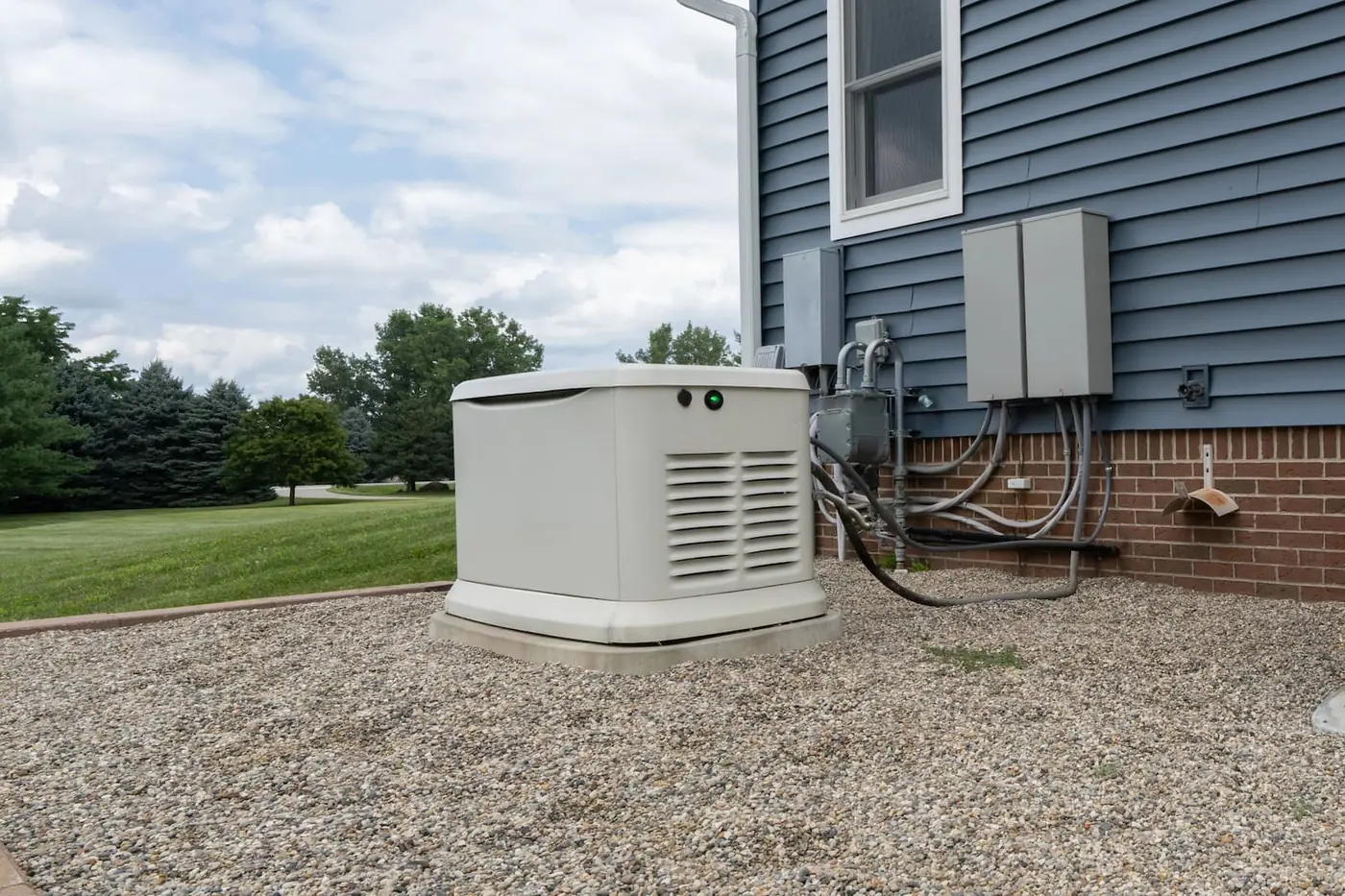
The honest answer: most winter no-starts are preventable
Cold-weather starting trouble is common across every standby brand, and it is almost never a defect. A standby generator is a small engine, and small engines are harder to start cold. When one does not fire in a deep freeze, the cause is nearly always a weak battery, thick cold oil, blocked airflow, or a fuel system that was not set up for winter. Every one of those is preventable.
That is the honest story, and it happens to be the one that matters most in Central Indiana. Our winters are the real test. A unit that is installed right, prepped for the cold, and serviced once a year starts on the first crank when an ice storm drops the grid. A unit that was set and forgotten is the one that sits silent in January. Getting the basics right is the whole game here.
Common winter problems, and how we prevent them
| Winter problem | Why it happens | How we prevent it |
|---|---|---|
| Weak or dead battery | Cold cuts cranking power, so a marginal battery fails on the coldest morning | Battery on a 2 to 3 year schedule, tested at annual service, plus a battery warmer |
| Hard cold cranking | Thick, cold oil is harder to turn over | The lighter cold-rated oil your manual specifies, changed on schedule |
| Snow or ice on the unit | A blocked intake and exhaust starve the engine and trap fumes | Correct clearances kept clear of drifts, and no tarps or homemade covers |
| Sluggish fuel regulator | Regulators can stiffen and propane can under-vaporize in deep cold | A correctly sized and placed fuel system, plus a cold-weather kit that holds temperature |
| Overcrank lockout | Repeated failed cold starts trip a fault and lock the unit out | Fix the root cause (battery, oil, fuel) at service so it starts on the first try |
| Never serviced | A unit installed and forgotten fails in the storm it was bought for | Annual service and the weekly self-test surface problems before an outage |
Qualitative on purpose. Exact temperatures, oil grades, and clearances vary by model, so follow your unit’s manual and Generac’s install specs. As a factory-authorized dealer we service it to keep your warranty intact.
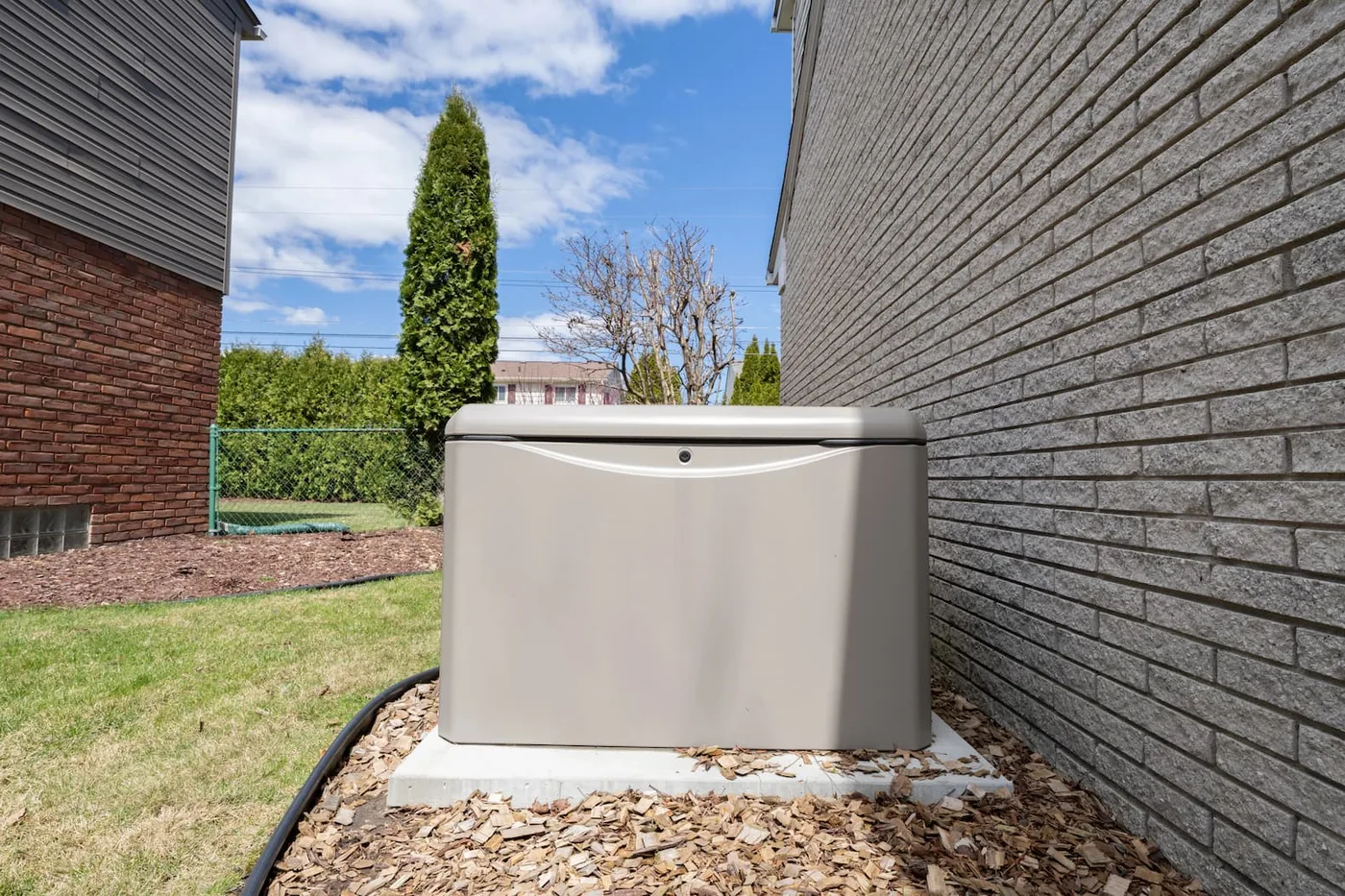
Why clearance matters more in winter
A standby unit breathes. It pulls cooling air in one side and pushes exhaust out the other, and it needs the clearances Generac and local code require to do it. In a Hamilton County winter, drifting snow and roof-shed ice can close those gaps fast.
We set placement so a normal snowfall never blocks the unit, and we keep the exhaust side clear of where snow slides or piles. Good winter placement is a decision made at install, not a fix made in a storm.
Yellow light, red light: what your generator is telling you
The panel is calmer than it looks. A yellow light is a warning the unit logs while it keeps running, usually service due, an oil or filter change, or a weak-battery alert, with messages like "Inspect Battery" or "Service Schedule A." It is telling you to attend to something soon, not that the generator has quit.
A red light is different. It means the unit has faulted and shut down, and it will not run until the fault is cleared. That one is a certified-dealer call. One winter fault worth knowing: if a cold unit cranks but does not catch several times, it can lock out on an overcrank fault. The fix is the root cause, a weak battery, the wrong oil, or a sluggish fuel regulator, not just a reset.
Why this is a local question in Hamilton County
Winter is when a generator here earns its keep. Duke Energy serves Fishers and most of Hamilton County, AES Indiana serves parts of the metro, and winter storms are routine: snow, sleet, freezing rain, and ice loading on lines and trees bring the outages. Duke Energy staged for and responded to Central Indiana winter storms in December 2024 and January 2025, and the December 2024 event concentrated outages around Fishers.
So the unit here does not idle its winter away. It has to cold-start under load in the worst of it. That is why cold-weather prep and a local dealer who answers the phone when a storm rolls through are what you are really buying, not just the box on the pad.
Common questions
Usually the battery. Cold cuts a battery’s cranking power, so a weak one that was fine in fall cannot turn the engine in a deep freeze. The other common causes are the wrong oil for the cold, a snow-blocked enclosure, or a sluggish fuel regulator. None of these is a broken generator, and all of them are preventable with the right setup and annual service.
For a Central Indiana winter, it is a smart standard. A cold-weather kit adds a thermostat-controlled battery warmer, and on many models an oil warmer, so the unit stays at starting temperature through a sub-freezing stretch. Kits are generally recommended where temperatures regularly drop below freezing, which describes our winters. Confirm the right kit for your specific model.
It is a warning, not a shutdown. Most often it means maintenance is due, an oil change or annual service, or that the battery is weak. The unit usually still runs. Check the message on the panel and your manual. A red light is different: it means the generator has faulted and stopped, and that is a call for a certified dealer.
Yes. Cold reduces the battery’s available cranking power and it self-discharges faster, so a marginal battery is most likely to fail on the coldest morning. Standby batteries generally need replacing every two to three years. A battery on a schedule, plus a battery warmer, is the biggest single lever on winter starting.
Yes, and keep the exhaust clear especially. Packed snow and ice against the unit block the airflow the engine needs and can trap exhaust, which is a carbon monoxide hazard. Keep the clearances Generac and local code require, and brush off the top, sides, and exhaust after a storm. Never wrap the unit in a tarp or a homemade cover, because that traps heat and fumes.
Yes, but propane needs the right tank and setup for a deep freeze. In extreme cold a propane tank’s pressure drops and the regulator can ice up, so tank size and placement matter more in winter. A correct install sizes the fuel system for cold-weather demand. If your unit runs hard on propane in a sub-zero stretch, that is a fuel-system question for your installer, not a defect.
A generator that starts every time is a setup question, not luck. It starts with a correct install and the right cold-weather prep, and it is kept with annual service. See our standby installation options and book a cold-weather check. As your factory-authorized Fishers dealer, we install it, prep it for an Indiana winter, and keep your warranty intact.
Standby Generator InstallationGenerac’s own documentation is the authoritative word on warranty-compliant service, cold-weather accessories, and maintenance, and specifics vary by model, so confirm the current guidance for your unit.
Generac: home standby generator warranty and service coverageCompiled from Generac’s own support documentation plus established industry and dealer guidance on cold-weather standby operation, current as of September 2026. Temperatures, oil grades, fault codes, and clearances vary by model, so follow your unit’s manual and Generac’s specs. Nothing here is a failure rate or a defect claim: cold-weather starting problems are common across standby brands and are almost always preventable with proper setup and service. Free to cite or link.
- Generac Help Center: what a home standby generator warranty covers
- Duke Energy News Center: preparing for an Indiana winter storm (local outage context)
- Cold-weather set points, oil grades, fault-code specifics, and clearances are model-specific: confirm them against your unit’s manual and Generac’s install specs, not this page.
Meridian Generator & Electric. “Common Generac Problems in Indiana Winters.” Updated September 2026. https://meridiangenerator.com/common-generac-problems-indiana-winters/ Tell us about your home.
Send the basics and we'll set up a free on-site assessment, run the load calc, and come back with a transparent, fixed bid, no obligation.
- Free on-site assessment, no obligation
- A real person responds, usually same day
- Authorized Generac dealer · warranty-compliant
Thanks, we have got it.
We'll review your details and reach out to set up your free on-site assessment and load calculation. If you would rather talk now, call or text us at (463) 283-5939.